Labels

Tuesday, May 3, 2022

A long shadow--Culloden

Culloden.  The very word evokes almost a hushed silence as it falls from the lips...yes in reverence to courage.  But also in memory of the sorrow of indefensible loss, the near obliteration of the Highland way of life and the incalculable pain by the Crown's response--forced eviction in the "Highland Clearances" and oppressive edicts designed to do away with Gaelic culture altogether.
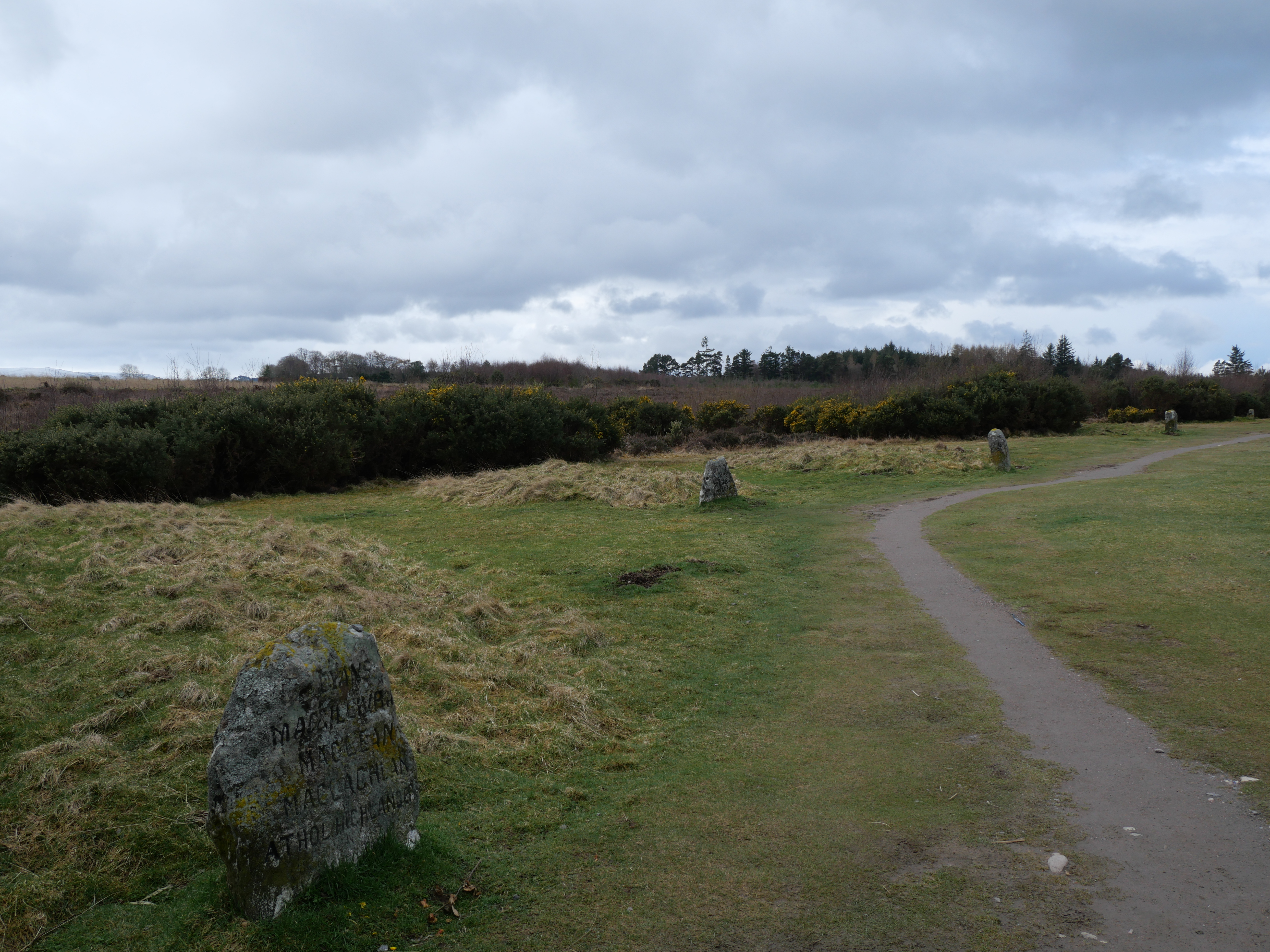
Mass graves of the Clans--Culloden April 9, 2022
Culloden was a tragedy in every sense of the word.  "Bonnie Prince Charlie's" vain pretense to the throne of Great Britain died at Culloden on April 16, 1746.  Unfortunately, his royal ambition took to the grave nearly 2000 Scot Highlanders along with it at Drummossie Moor, now generally called Culloden.

According to Historic Environment Scotland: "There is little doubt that Culloden is one of the most emotive battles to have been fought in the UK."  Emotive?  Aye.  No denying and far more.  Culloden "cast a long shadow" as historian Murray Pittock with the University of Glasgow puts it.  Its shadow is still cast.   

On the thankful side, Culloden is the last pitched battle on Great Britain's soil.  The battle is also a testament to the inadvisability of having a prince (or aspirant king) lead troops in battle. 

Not until after June 24, 1859 would the advice to keep princes out of the battle take hold in Europe.  Hindsight after horrific losses under Austrian Emperor Franz Joseph at the Battle of Solferino during the Second Italian War of Independence.  300,000 troops were engaged.  Suffering of the wounded left on the field literally to fend for themselves (the military custom of princes in that day) was so terrible, the Swiss merchant Jean-Henri Dunant who had ministered aid to Solferino's abandoned wounded would ultimately drive the enactment of the Geneva Conventions and establish the International Red Cross.

Leanach Cottage, Culloden, April 9, 2022

Culloden had its princely horrors in the shadows too...the sufferings, suppression and genocidal massacres afterwards.  It is said, in one example, Duke of Cumberland (e.g. Prince William, third and youngest son of Hanoverian King George II of Great Britain) pointed at a wounded highlander, apparently at Lieutenant Colonel Charles Fraser, after the battle at Culloden and directed Major James Wolfe to shoot him.  Wolfe refused, reputedly saying that his commission was at the disposal of the Duke...but not his honor.  Wolfe incidentally would go on to glory in the French and Indian War in America, dying on the Plains of Abraham below Quebec on September 17, 1759 in victory over the French.

Some always seem willing to carry out dark deeds in war.  Upon Wolfe's refusal, the Duke commanded a private to shoot the highlander.  So he was.  Government troops were sent across Culloden battlefield to bayonet all surviving Highlanders, wounded or otherwise, earning Cumberland his epithet, either "Sweet William" or "The Butcher" depending on one's sensitivities.  Over next several years, some 80 Jacobite were hung.  Hundreds more were sent as slaves to the sugar plantations in the Caribbean. 

Well of the Dead, Culloden April 9, 2022

Culloden was, but it should not have been.  Bonny Prince Charlie and his advisors chose the battleground at Drummosie Moor (against advice from the Jacobite's able Lord General John Murray).  And while Prince Charlie chose it, the government troops defined its  range by its massed its artillery--ten 3 pounders and 6 mortars--behind the Government's forward line.  

The Jacobite had more or less been successful in all their battles during "the 45" uprising--except their last at Culloden.  Success and ambition have a way of distorting things, true then, true now.  The reality then was that the Jacobite army was exhausted on the day of the Culloden battle, poorly provisioned, dispirited, in dissension and...outnumbered.  It was in no position to offer a set piece battle that day at that hour.  Highland reinforcements had yet to arrive, as the Jacobite army began to take up its positions at Culloden.  

Among the strategies suggested was to break off contact, move to the northern Highlands and to carry out a guerilla campaign to give the army time to refurbish and resupply.  This would not, however, get Bonnie Prince Charlie to the throne.  And it was all about Bonnie Charlie.  So, Prince Charlie formed up on the battleground suggested by his Secretary, Sir John William O'Sullivan, the adjutant and quartermaster general of the Jacobite army.  Remaining at odds with that choice, Murray went on record.  He believed the moorland would nullify the one battle tactic Scots had--it would hamper a Highland charge.

Location of the Jacobite Line, Culloden, April 9, 2022
To offset their disadvantages, the Jacobite attempted a surprise attack during the night of April 15th.  About 4,500 Jacobite set off to strike Duke of Cumberland's army in camp, some ten miles distant.  The night march was chaotic and slow.  It was called off before dawn.  The Duke awoke his army at 4 a.m., prior to arrival of the struggling Jacobite units.  With the element of surprise lost, Jacobite troops returned to Culloden...hungry and exhausted.  At 5 a.m., the Duke put his army to field.  By late morning, about 11 a.m., the two armies came into view of each other, and formed into their battle positions by 1 p.m.  

A few minutes later, artillery fire was exchanged, initiated by the Jacobite without effect.  Unlike the Jacobite, however, government gunners were well-trained under William Belford, part of the first generation of artillery officers to be promoted based on merit, not political connections.  The government's artillery wrecked havoc on the Highland lines for half an hour.  Prince Charlie delayed because he anticipated the Government line would advance.  They did not comply with Charlie's assumptions.  So, a great part of whatever field advantage he presumed he had was abandoned.  Unable to sustain the Government's artillery fire on his Highlander lines by further waiting for the Duke to advance, Prince Charlie ordered the clansmen forward...across the boggy terrain of Drummosie Moor directly onto the Duke's killing field, which was ranged by effective artillery fire and massed muskets.

Highland cattle grazing to recreate bog, April 9, 2022
Recent geophysical surveys and metal detection sweeps indicate that Culloden's courageous Highlanders had, even so, came much closer to breaking the government lines in the "Field of the English" than has once been assumed.  Some fought their way, temporarily, to the second line.  Those who survived the charge across the moor collided with government line about 5 minutes after the advance was ordered.  

They closed in ferocious close quarter combat, but the Battle of Culloden was decided within fifteen minutes of the Highland charge even being ordered.  From start to finish, the battle lasted less than an hour.  

An hour...it cast a long shadow.  Archaic weapons with antiquated tactics were simply no match.  Culloden had changed everything.  

Government line from enclosure, April 9, 2022

Not all agree with this "older" characterization of Culloden as a battle between a professional army with artillery and muskets beating wild Highlanders with swords.  Battlefield archeological research now suggests the Jacobite had far more muskets than was once assumed.  They were well supplied with Spanish and French muskets.  

Positions of opposing infantry fights have been determined by metal detection because of the difference in caliber between the Spanish and French supplied muskets of the Jacobite, and the the British "Brown Bess".  That is not absolute, however, since the Jacobite also deployed British muskets taken in earlier "45" battles.  

A reversal in roles has been suggested.  Rather than Royal muskets cutting down Highland swordsmen, it has been speculated that Royal Dragoons (i.e. British swords) cut down Jacobite musketeers.  Perhaps.  That may be too fine distinction.  Horse in that day were used to flank lines, reconnoiter and finish the fight, or prevent their own lines from being flanked.  The Jacobite infantry began a retreat at 1:50 p.m.  Immediately upon their retreat, Government dragoons were set loose to flank them, to turn what was a Jacobite defeat into a strategic rout.  The Government dragoons succeeded in their mission.  Further, it cannot be ignored that Government artillery forced Prince Charlie to order the disastrous charge over Drummosie Moor rather than hope to lure the Duke's army toward the waiting Highland swordsmen, Jacobite muskets or British horse notwithstanding. 

Culwhiniac enclosure, Culloden, April 9, 2022
Our visit to Culloden came a week shy of the battle's 276th year commemoration.  Little doubt, we had similar weather.  The fighters at Culloden are said to have endured "a howling, freezing gale, on Wednesday, April 16, 1746."  Our Saturday, April 9th visit was also cold, a very blustery day of mixed skies.  

Blue skies attempted to break through; but each time they tried, they were hurled back by cells of sleet and hard kernel snow.  It was disorienting, near the edge of hypothermia.  The wind found ways around our sleeves, collars and pant legs to rob anything that might resemble body heat.  And in a final act of contempt of our presence on the battlefield, it pelted us with hard snow or stung us with wet sleet.

We had wanted to walk to the Clava Cairns from the battlefield, but low-lying snow squalls concealed the route and direction over the River Nairn, which we would have needed to cross.  I won't call these squalls fog.  No fog packs that much wind in it.  We opted for the bus back to the warmth of our accommodations in Inverness. 

Memorial Cairn, Clan Cemetery, Culloden April 9, 2022
Having walked Culloden, its "long shadow" is understandable.  While at the Battlefield Cairn, we spoke with a Scot family, three generations of them actually.  Beyond routine casual comments about the battlefield, our respective homes, and events so similar today (like Ukraine) the older gentleman chuckled that he remembered coming here as a youth.  His son, now a middle aged man, was taking picture of his sons, who posed at the memorial cairn like he did years ago. The cairn was erected by Duncan Forbes in 1881 in the Clan Cemetery to memorialize the fallen Highlanders.    

Culloden is now an inalienable part of the Highland people.  Its lines woven into the very fabric of their generations.   


Sunday, May 1, 2022

So it begins--Inverness on the schedule

To get to Scotland from Idaho County is a lengthy ordeal at best.  You have to want to go there.  To be packed sardine-like in a transatlantic flight, to say nothing of similar conditions on connector flights and the brutal 8 hour time difference, requires a certain amount of stoicism to be sure.  So for us, booking the least number of hours aboard aircraft or in airports is key, for sanity's sake and physical tolerance alone.

Inverness Cathedral April 9, 2022
In the halcyon days of our first trips to Scotland, we simply drove an hour to Lewiston Airport.  We would leave our rig in their free parking lot and from there fly to Seattle, which is our direct international gate in this part of the world. 

But with corporate decision making being what it is, powers that be decided that Lewiston would be closed to flights except those that route through Salt Lake.  That would be fine.  Nothing against the Land of Zion.  But the problem is that routing through Salt Lake will add hours as well as additional layovers to the flight.  

So keeping sardine time to an absolute minimum, we continue to book through SEATAC with several direct transatlantic gates.  This does, however, make a bit more work on our part.  Getting to Seattle now entails a +3 hour drive up to Spokane for the commuter turbo prop that we used to take from Lewiston.  

In the plus column, if the Spokane commuter is well-timed, the Seattle layover is minimal, less than two hours for the late afternoon or early evening direct.  The drawback is that return trip. 

River Ness and the spires of Inverness April 9, 2022

The Seattle commuter lands in Spokane after 9 p.m.  Then there's that +3 hour drive home facing us, a genuine slap-the-face-and-swill-coffee ride of questionable safety.  Recovering from "jet lag" on the fly, so to speak.  It's either that or (probably more sensibly) book a room in Spokane and make the drive during daylight hours. 

In any case, Inverness was chosen as our "jet lag recovery" place, i.e. our first couple nights on the 2022 Scotland tour.  (This assumes one can ignore a night already spent on the transatlantic flight).  

We chose Inverness for this, not because we necessarily wanted to start there.  To be honest, it was more a function of how the transportation links hook up for a trip to Orkney.  That said, neither was Inverness a "second thought" stop.  In fact, we chose to spend three nights there, with something of an excuse (as if we need one).  We were waiting for the Monday morning (April 11th) commuter flight from Inverness to Kirkwall.

Inverness Cathedral April 9, 2022
If it were not Inverness for our first night, the only realistic option would have required spending our first night in Glasgow.  True because the flight landing in Glasgow does not connect with the Kirkwall flight...not until the next morning, Saturday (April 9).

Having already spent many nights in Glasgow we were not keen on another, not when so many other places remained.  Besides, a Saturday flight into Kirwall, if we would have stayed in Glasgow the first night, had a separate set of issues.  Not the least of which was that the "car hire" place (Orkney Car Hire) has a short day on Saturday, closing at 1 p.m.  [Incidentally, a plug. Orkney Car Hire is highly recommended, based on our experience doing business with them.  First class.]    

Anyhow, all this extra "stuff" to consider pushed us onto Scotrail, to a location where we intended to recover from the "big flight".  That location was Inverness.  Actually, we spent our first weekend on the 2022 Scotland tour in Inverness.  Or rather, we spent Saturday and Sunday there.  Friday had essentially been consumed, landing in Glasgow and then spending the better part of the rest of the day on the Main Highland Rail Line.  About all we had left in us Friday evening was to take dinner in the hotel restaurant, and trade humor and barbs (and an occasional lie or two) about Idaho with the few patrons and staff there.

Inverness April 10, 2022

Inverness is a charming city on the banks of River Ness.  No denying it.  It is something of a destination place too, assuming one were avant-garde, hip and all that--we are not and don't even try to be.  We have our own thing happening.  

But Inverness does currently enjoy a reputation as a travel hot spot among younger Europeans and Americans.  Many treat it as the end of the line in the Highlands.  It really isn't.  Above it there's Sutherland, Caithness and...Orkney.  We intended to go considerably further north.  

But while in Inverness, we did see many backpackers alight, doubtlessly from the Continent.  And we also saw many oldsters, principally  Americans.  Exactly where they may have been destined during their weekend is unknown.  They never appeared to make it very far from the hotel bar.

As for ourselves, we did make several walks which will be recounted in another post.  Our principal destination was Culloden Field, as would perhaps only be right to do given it occurred at the same time of year. 

Darla on the walls of Inverness Castle April 10, 2022
In 2018, similar to the options we had in 2022, we  boarded Scotrail, the West Highland Line from Glasgow to Oban, where we spent the first night.  This year, we boarded Scotrail's Main Highland Line to Inverness for our first night.  Again, it was a scheduling matter.  

Even then, the schedule ended up requiring a foot race from Glasgow International immediately upon clearing customs.  To make the train we wanted was a quick-walk.  Even at that we barely caught the 500 Express airport bus into central Glasgow.  Our goal was to catch the 12:09 p.m. Scotrail to Inverness from the newly renovated and redesigned Queen Street Station.  We did, making the station with maybe 10 minutes to spare.  The 500 Express we took was the only bus that would've done so.  Had we missed it, we would have been on the next train.

The 12:09 p.m. Scotrail was not a make or break train per se.  It was more a matter of convenience.  Had we missed it, about 30 minutes after the 12:09 we had the option of taking the 12:34 p.m. train also to Inverness.  What the 12:09 p.m. train did was cut rail travel time to Inverness by over an hour since it avoided a long layover at Perth Station by traveling through the station.  The 12:34 would have arrived at Inverness right in the middle of peak rush hour.  As it was, we beat it with the 12:09.   

As for advice, because we were uncertain from Idaho if we could even make the 12:09 (it was a tight footrace), we purchased "good anytime of day" passes that would work on either train.  The logic went:  if we miss the 12:09 we can probably make the 12:34.  It's an example of trying not to be penny wise and pound foolish.  Attention to the Scotrail schedule (times and layover stops) is worth doing if you use it.